

Dental Implants Irvine
Looking for dental implants in Irvine? Discover implant benefits, treatment steps, costs and alternatives, then contact Sand Canyon Dental.
Dental Implants Irvine
Missing teeth can affect how you eat, speak, and feel about your smile. If you are researching Dental Implants Irvine, Sand Canyon Dental provides a local option for discussing implant-based tooth replacement and whether it may be appropriate for your oral health needs.
Dental implants are one method of replacing missing teeth. They can be used in certain cases to support a single crown, multiple-tooth restorations, or other implant-supported solutions. However, implant treatment is not suitable for every patient.
A professional evaluation is important because candidacy may depend on your gum health, bone condition, medical history, oral hygiene, treatment goals, and other individual factors.
Considering dental implants in Irvine? Contact Sand Canyon Dental to discuss your tooth replacement options and schedule a consultation.
How Do Dental Implants Work?
Dental implants are designed to create support for replacement teeth using the jawbone.
After an implant is placed, the surrounding tissues require time to heal. During this healing period, biological integration can occur between the implant and the surrounding bone.
Once healing is appropriate, restorative treatment may continue with an abutment and final restoration.
The overall process may include:
Initial evaluation
Implant treatment planning
Implant placement
Healing and integration
Restorative planning
Placement of the final restoration
Follow-up and maintenance
The exact sequence can vary depending on your oral health, bone condition, number of missing teeth, and treatment plan.
What Are Dental Implants?
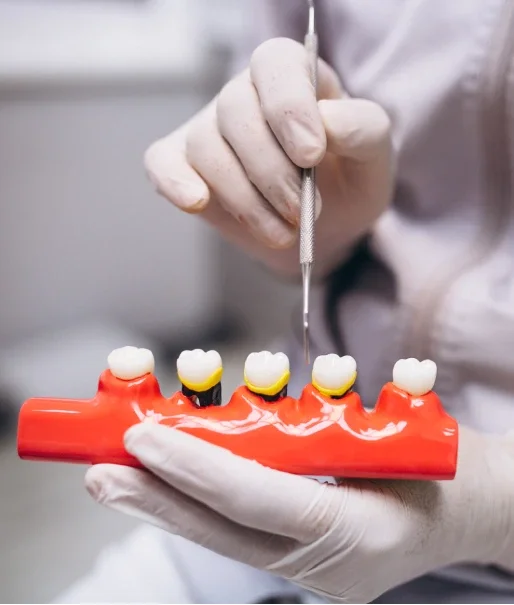
Dental implants are used to support replacement teeth after one or more natural teeth have been lost.
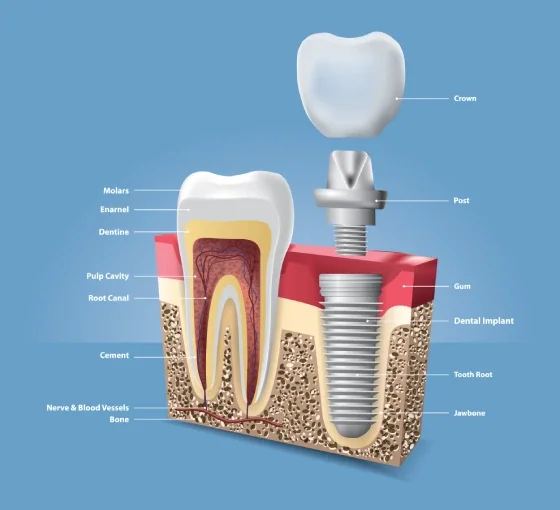
A typical implant-supported restoration may include three main components.
Dental Implant
The dental implant is the part placed into the jawbone to provide support for the replacement tooth or restoration.
It functions as a foundation for the restorative components placed above it.
Abutment
An abutment is a connector placed between the implant and the visible dental restoration.
Its specific design depends on the type of implant restoration being used.
Dental Crown or Restoration
The visible portion of implant treatment may be a crown or another type of restoration designed to replace the missing tooth or teeth.
Not every implant case follows exactly the same treatment sequence, and the type of restoration depends on the patient's individual needs.
Benefits of Dental Implants
Dental implants may provide several advantages for appropriately selected patients.
Potential benefits can include:
Replacing one or more missing teeth
Supporting chewing function
Providing a fixed tooth replacement option in suitable cases
Avoiding preparation of neighboring teeth in some single-tooth situations
Supporting certain multi-tooth restorations
Supporting some types of implant-retained dentures
Restoring the appearance of a missing tooth
Providing long-term tooth replacement potential with appropriate care
Dental implants should not automatically be described as permanent or lifetime solutions.
Their longevity can be influenced by oral hygiene, gum health, bone health, medical conditions, smoking, bite forces, habits, the condition of the restoration, and ongoing professional care.
Who May Be a Candidate for Dental Implants?
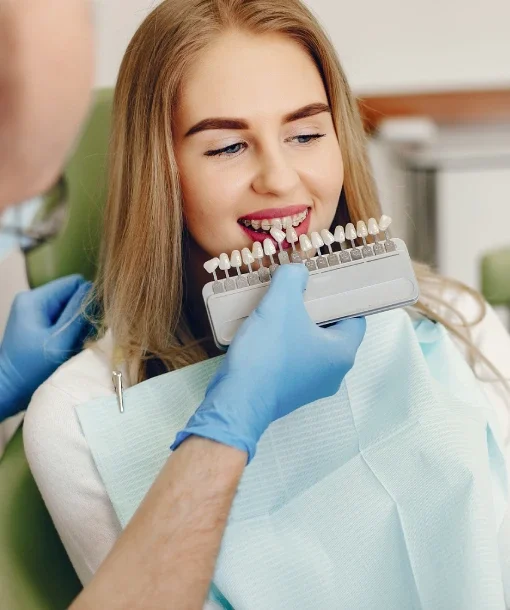
Dental implant candidacy is individualized.
A dentist may consider factors such as:
Number and location of missing teeth
Condition of remaining teeth
Gum health
Available bone
Oral hygiene
Medical history
Smoking or tobacco use
Healing ability
Bite and chewing forces
Treatment goals
Ability to maintain follow-up care
Having reduced bone does not automatically mean dental implants are impossible. Some patients may need additional evaluation or preliminary treatment before implant placement can be considered.
Whether those procedures are appropriate depends on the individual case.

Types of Dental Implant Tooth Replacement
Dental implants can be used in different ways depending on how many teeth need to be replaced.
Single Tooth Dental Implant
A single implant may sometimes be used to support a crown that replaces one missing tooth.
This can provide an alternative to other tooth replacement options in suitable cases.
Implant-Supported Dentures
Dental implants can sometimes be used to provide additional stability or retention for certain types of dentures.
This differs from conventional removable dentures that rely primarily on the gums and supporting tissues.
Multiple Tooth Replacement
When several teeth are missing, dental implants may sometimes support a restoration that replaces multiple teeth.
The number of implants required does not always match the exact number of missing teeth.
Full-Arch Implant Treatment
In certain cases, dental implants may be used to support a full-arch restoration replacing most or all teeth in an upper or lower arch.
Implant-Supported Bridge
An implant-supported bridge may use dental implants as support for a restoration replacing multiple missing teeth.
The specific design depends on the patient's anatomy and treatment needs.
Dental Implant Procedure: What to Expect
The implant process is usually planned in stages.
Step 1: Dental Implant Consultation
The first step is a professional evaluation.The dentist may assess:
Missing teeth
Remaining teeth
Gum health
Bite
Bone condition
Medical history
Treatment expectations
This helps determine whether dental implants may be appropriate.
Step 4: Implant Placement
During implant placement, the dental implant is positioned in the planned area of the jawbone.
The exact surgical approach varies depending on the case.
Step 7: Follow-Up and Maintenance
Dental implant treatment requires ongoing care.
Regular dental visits, home oral hygiene, and professional maintenance can help monitor the implant restoration and surrounding tissues.
Step 2: Diagnostic Evaluation and Treatment Planning
Appropriate dental imaging and a clinical examination may be needed to evaluate the treatment area.
The dentist can then develop a treatment plan based on the patient's individual anatomy and restorative needs.
Step 5: Healing and Integration
After placement, time is generally needed for healing.
The duration can depend on bone condition, implant location, healing response, medical factors, and the overall treatment plan.
Step 3: Preparing for Implant Treatment
Some patients may require treatment of existing dental or gum problems before implant placement.
The need for preliminary treatment varies.
Do not assume that every patient requires extraction, bone grafting, or another additional procedure.
Step 6: Abutment and Final Restoration
After placement, time is generally needed for healing.
The duration can depend on bone condition, implant location, healing response, medical factors, and the overall treatment plan.
How Long Does Dental Implant Treatment Take?
There is no universal dental implant timeline.
Treatment length can depend on:
Number of implants
Location of the implant
Bone condition
Healing response
Need for preliminary procedures
Complexity of the case
Restorative plan
Overall health
Some cases may progress differently from others, even when the number of missing teeth appears similar.
A professional consultation is the best way to receive an estimated timeline based on your individual treatment plan.
Avoid choosing implant treatment based solely on promises of unusually fast results.
How Much Do Dental Implants Cost in Irvine?
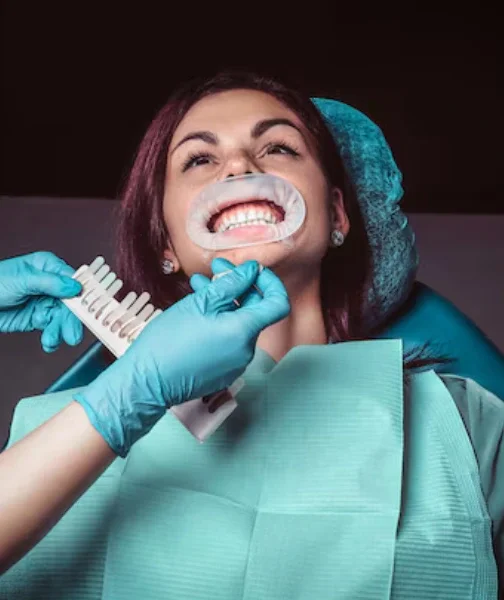
The cost of dental implants in Irvine can vary significantly because implant treatment is individualized.
Factors that may affect cost include:
Number of missing teeth
Number of implants required
Type of restoration
Complexity of treatment
Diagnostic requirements
Preliminary treatment if needed
Implant placement fees
Abutment costs
Final crown or restoration costs
Provider-specific fees
Insurance benefits when applicable
It is important to understand that an advertised “implant price” may refer only to one component of treatment.
For example, a quoted implant fee may not automatically include the abutment, crown, imaging, preliminary procedures, or other restorative costs.
Does Dental Insurance Cover Dental Implants?
Dental insurance coverage for implant treatment varies by plan.
Some policies may provide benefits for certain portions of treatment, while others may exclude dental implants or impose restrictions.
Possible factors include:
Annual maximum
Deductible
Coinsurance
Waiting periods
Network requirements
Implant-specific limitations
Missing-tooth clauses where applicable
Coverage for the final restoration
Other plan exclusions
Even when a plan includes implant-related benefits, coverage does not necessarily mean the full treatment cost will be paid.
Patients should review their individual benefits and confirm current coverage.

Dental Implants vs. Dental Bridges
Dental implants and dental bridges are both used to replace missing teeth, but they work differently.
Factor
Support
Neighboring teeth
Surgery
Timeline
Cleaning
Suitability
Maintenance
Dental Implant
Supported by an implant placed in the jaw
May avoid preparing adjacent teeth in some cases
Usually involves implant placement surgery
Often involves healing stages
Requires careful cleaning around implant restoration
Depends on bone, health, and other factors
Ongoing monitoring required
Dental Bridge
Usually supported by neighboring teeth
Supporting teeth may require preparation
Usually does not require implant surgery
May have a shorter restorative timeline
Requires cleaning around and beneath bridge
Depends on condition of supporting teeth
Ongoing monitoring required
Dental implants are not automatically better than bridges.
The appropriate option depends on the patient's oral health, supporting teeth, bone, treatment goals, medical factors, and preferences.
Dental Implants vs. Dentures
Dental implants and conventional dentures also differ significantly.
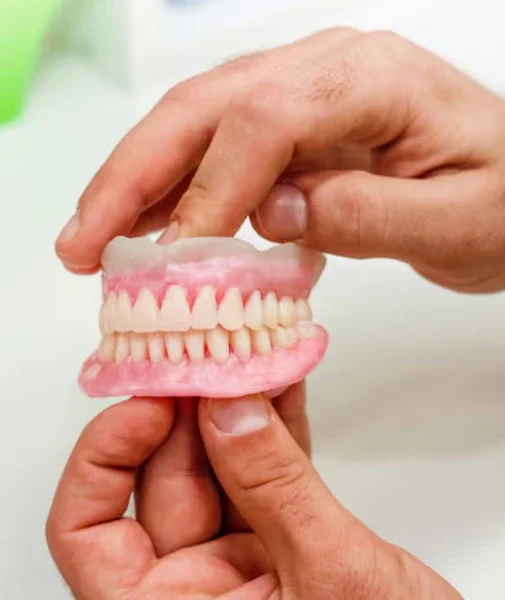
Traditional dentures are generally removable and supported by the gums and underlying tissues.
Dental implants may support:
A single fixed crown
A fixed bridge
An implant-retained removable denture
Certain full-arch restorations
Implant treatment generally requires surgery, while conventional dentures typically do not require implant placement.
Cost, treatment time, maintenance, stability, and suitability can also differ.
The best option depends on the patient's anatomy, oral health, preferences, budget, and overall treatment goals.
Caring for Dental Implants
Dental implants require ongoing oral hygiene and professional maintenance.
General care may include:
Brushing daily
Cleaning around the implant restoration
Cleaning between teeth and restorations as instructed
Attending regular dental visits
Maintaining healthy gums
Avoiding habits that may damage restorations
Following individualized dental recommendations
Dental implants are not immune to complications.
The gum and bone tissues surrounding implants can develop problems, which is why ongoing care remains important.
How Long Do Dental Implants Last?
Dental implants may provide long-term tooth replacement for suitable patients, but no responsible provider can guarantee that an implant will last for life.
Longevity can depend on:
Oral hygiene
Gum health
Bone health
Smoking
Medical conditions
Bite forces
Teeth grinding
Professional maintenance
Implant position
Condition of the crown or restoration
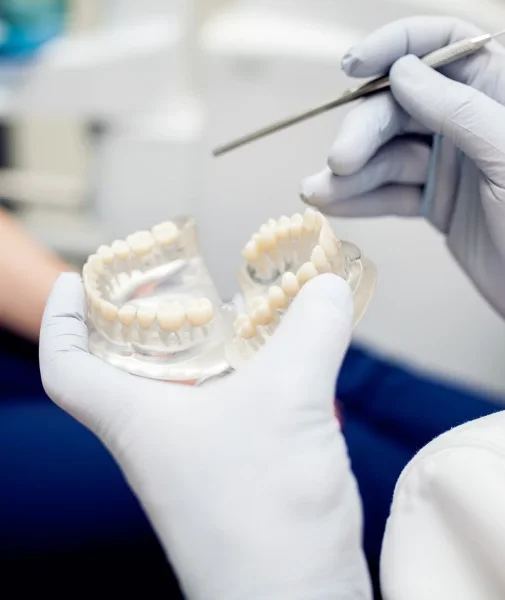
It is also important to distinguish the implant fixture from the restoration placed on top of it.
The implant itself and the crown, bridge, or denture it supports may have different maintenance or replacement needs over time.
Why Choose Sand Canyon Dental for Dental Implants in Irvine?
Choosing an implant dentist involves more than comparing location or price.
Patients should consider:
Dentist credentials
Implant training
Diagnostic approach
Treatment planning
Communication
Restorative capabilities
Surgical capabilities
Specialist coordination when necessary
Follow-up care
Insurance guidance
Payment options
Sand Canyon Dental provides dental care in Irvine and can be contacted to discuss tooth replacement options.
Replace Missing Teeth With Dental Implants in Irvine
Living with a missing tooth does not mean there is only one treatment option.
Dental implants may be appropriate for some patients, while bridges, dentures, or other restorative options may be more suitable for others.
A professional evaluation can help determine which treatment approach fits your oral health, bone condition, treatment goals, and individual circumstances.
If you're researching Dental Implants Irvine, Sand Canyon Dental can help you explore your available tooth replacement options.
Ready to explore your tooth replacement options? Contact Sand Canyon Dental to schedule a dental implant consultation in Irvine.
Frequently Asked Questions About Dental Implants
-
A dental implant is a component placed in the jawbone to support a replacement tooth or other dental restoration. Implant treatment may also include an abutment and final crown or restoration.
-
Dental implants provide support for replacement teeth through the jawbone. After placement and appropriate healing, the implant may be connected to an abutment and final restoration.
-
Candidacy depends on factors such as gum health, available bone, oral hygiene, medical history, healing ability, and treatment goals. A professional evaluation is required.
-
Treatment time varies based on the complexity of the case, required tooth movement, patient compliance, response to treatment, and whether refinements are necessary.
-
Dental implant costs vary according to the number of implants, type of restoration, complexity, diagnostic needs, preliminary treatment, and provider-specific fees. An evaluation is needed for an individualized estimate.
-
Some dental insurance plans may provide benefits for certain portions of implant treatment, while others may limit or exclude coverage. Patients should verify their individual benefits.
-
Dental implants may provide long-term tooth replacement, but longevity varies. Oral hygiene, gum and bone health, medical conditions, smoking, bite forces, and professional maintenance can all affect outcomes.
-
Not necessarily. Implants and bridges have different advantages, limitations, costs, and treatment requirements. The appropriate option depends on each patient's oral health and circumstances.
-
Dental implants may sometimes support restorations replacing several missing teeth. The number and placement of implants depends on the treatment plan.
-
Daily brushing, appropriate interdental cleaning, regular dental visits, professional maintenance, and monitoring of surrounding gum health are important parts of implant care.